The core difference lies in hackle orientation and hydrodynamics. A Western soft hackle angles fibers rearward to sweep back passively on a downstream swing. A sakasa kebari angles hackle forward toward the hook eye; pulse tension against a fixed tenkara line causes the fibers to flare open and compress, actively mimicking living aquatic movement in pocket water.
At first glance across a fly-tying bench, a traditional Japanese sakasa kebari and a classic British Partridge and Orange look like long-lost cousins. Both feature modest thread bodies, sparse profiles, and soft, webby gamecock or partridge feathers. Neither carries a heavy brass bead or sculpted lead wraps.
Tie both onto 5X tippet and fish them through an autumn pocket water seam, however, and their hydraulic behavior splits entirely. One was bred for swinging across wide, flat currents on greased silk lines. The other evolved to dance under the tip of a long, fixed-line rod amidst turbulent plunge pools. Understanding the functional differences between sakasa kebari vs western soft hackle flies will change how you manipulate your fly and read current seams this season.
Anatomy: The Backward Logic of the Forward Hackle
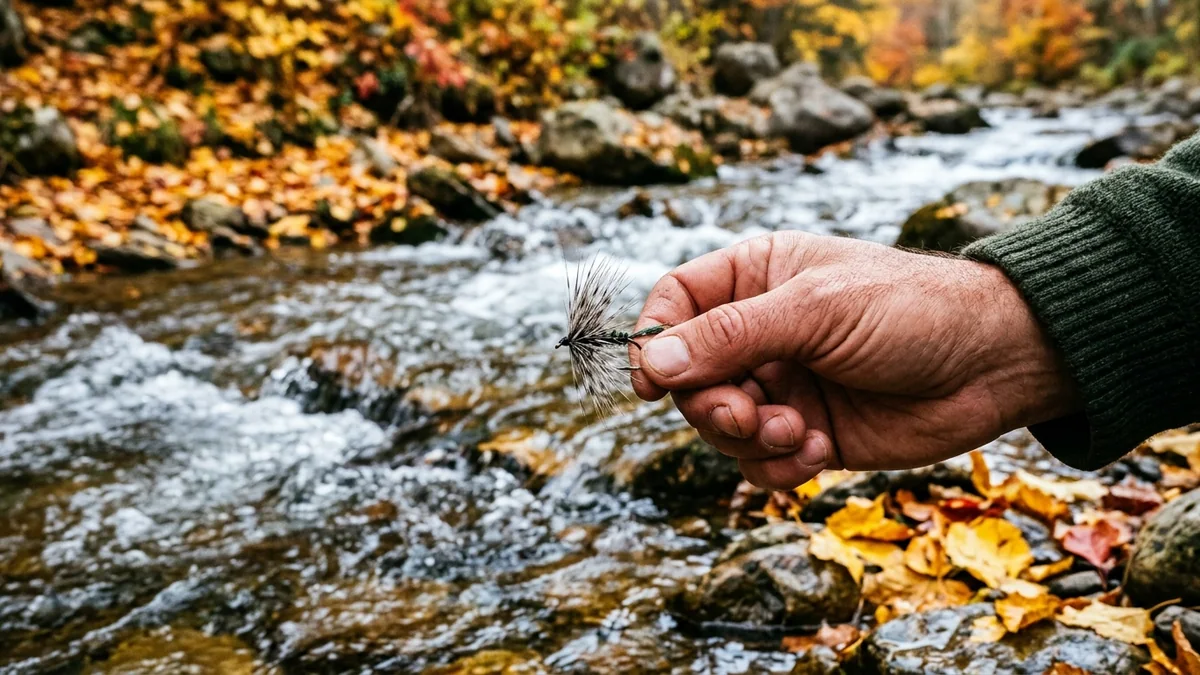
To unpack what is a sakasa kebari, look at the orientation of its collar. The Japanese word sakasa literally translates to "inverted" or "reverse," while kebari simply means "feathered hook." While a traditional Western soft hackle features fibers tied sweeping back toward the hook bend, the hackle of a sakasa kebari points outward and forward, past the eye.
This is not a careless aesthetic choice. It is hydrodynamics tailored to fixed-line presentation:
- Western Soft Hackle: Slanted rearward to collapse along the shank under water pressure. It creates a sleek, hydrodynamic teardrop profile that sinks smoothly on a passive dead drift or tensioned downstream swing.
- Sakasa Kebari: The forward-facing hackle resists the current. When tension is applied, water pushes into the cups of the barbules, forcing them outward like a microscopic parachute.
Western anglers who experiment with using Western flies on traditional rods quickly spot the difference. A swept-back soft hackle swims elegantly, but it slips through water resistance rather than grabbing hold of it.
The Physics of Reverse Hackle Fly Action
The true signature of reverse hackle fly action happens when you actively work the line. Traditional Western fly fishing treats drag as an enemy, preaching line mends to achieve a flawless, motionless float. Tenkara accepts that aquatic insects rarely float motionless like miniature statues.
When you plant a sakasa kebari in a feeding lane and twitch the rod tip by an inch, two things occur:
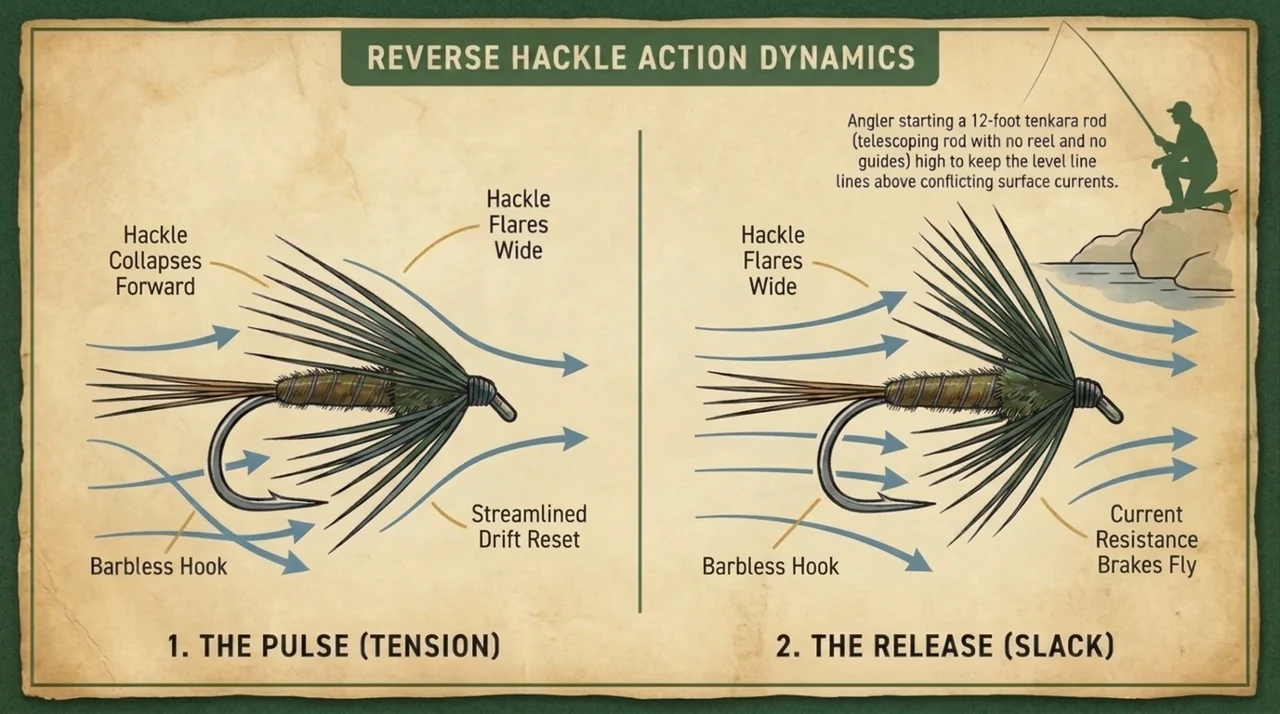
- The Pulse: Applying line tension flares the hackle fibers out perpendicular to the hook shank. The fly brakes against the current, expanding its visual footprint.
- The Release: Slackening tension for a split second allows the elastic stem of the feather to spring back toward the hook eye as current washes past, contracting the silhouette.
This rhythmic flare-and-collapse mimics the pulsing abdominal movement of an emerging caddis pupa or a swimming mayfly nymph fighting an autumn hydraulic seam. Because your line remains held clear of cross-currents by a 12-foot rod, you dictate every millimeter of that pulse without line sag dragging the fly out of the target zone.
Side-by-Side Comparison: Mechanics and Applications
Neither design is universally superior; each solves distinct hydraulic puzzles on moving water.
| Feature | Sakasa Kebari | Western Soft Hackle |
|---|---|---|
| Hackle Direction | Angled forward over the hook eye | Swept rearward toward the hook bend |
| Primary Action | Active pulsing, anchoring, darting | Passive swimming, smooth gliding |
| Drift Style | Upstream/quartering with rhythmic tension | Down-and-across swing, dead drift |
| Water Type | Fast pocket water, plunge pools, seams | Glides, tailouts, medium-gradient flats |
| Hook Weight | Light-wire standard dry/nymph hooks | Wet fly hooks, occasionally heavy wire |
| Line Contact | Requires taut line above water surface | Tolerates floating line resting on surface |
The Fall Connection: Low Water and Finicky Predators
Autumn brings crystalline, low flows and spooky trout preparing for winter or the spawn. As outlined in our guide to fall tenkara tactics for pre-spawn trout, mountain fish are aggressive toward caloric meals but easily startled by heavy splashes.
A beadhead nymph plummets too hard and snags dead leaves tumbling along the stream bed. A high-floating bushy dry fly often gets ignored when cool autumn winds chill the surface film. This is where both soft hackles and sakasa kebari shine—but they handle different parts of the pool.
When to Fish the Western Soft Hackle
Reach for a classic Partridge and Orange or March Brown soft hackle when working the slick tailout of a pool where water moves slowly. In glass-calm water, an aggressive pulsing motion can spook wary brown trout. A passive, dead-drifted Western soft hackle rides just below the surface tension, appearing vulnerable, defenseless, and entirely natural.
When to Fish the Sakasa Kebari
Swap to a sakasa kebari when you move up to the churning riffles, boulder pockets, and white-water drop-offs. In broken water, trout have only a fraction of a second to decide whether an object is food. The dramatic, pulsing motion of reverse hackles acts as a beacon, catching light and sending micro-vibrations through the turbulence.
Furthermore, the reverse collar acts like a drogue chute. It anchors the kebari in the strike zone, keeping the fly submerged under tension instead of letting the rod tip instantly yank it airborne.
The Myth of the One Fly Philosophy
Anglers discovering tenkara often encounter the famous one fly philosophy tenkara masters lived by. Legends tell of commercial mountain anglers (shokuryoshi) carrying a single kebari pattern in their pocket for an entire lifetime, catching thousands of native amago and iwana.
Beginners often misinterpret this as zen mysticism or rigid stubbornness. In reality, it was ruthless practicality. A master tenkara angler did not change flies to match an insect hatch; they changed how they moved the fly. By altering rod height, casting angles, and pulse frequency, an angler can make one sakasa kebari imitate an unhatched nymph crawling the bottom, an active pupa rocketing upward, or a spent adult trapped in the film.
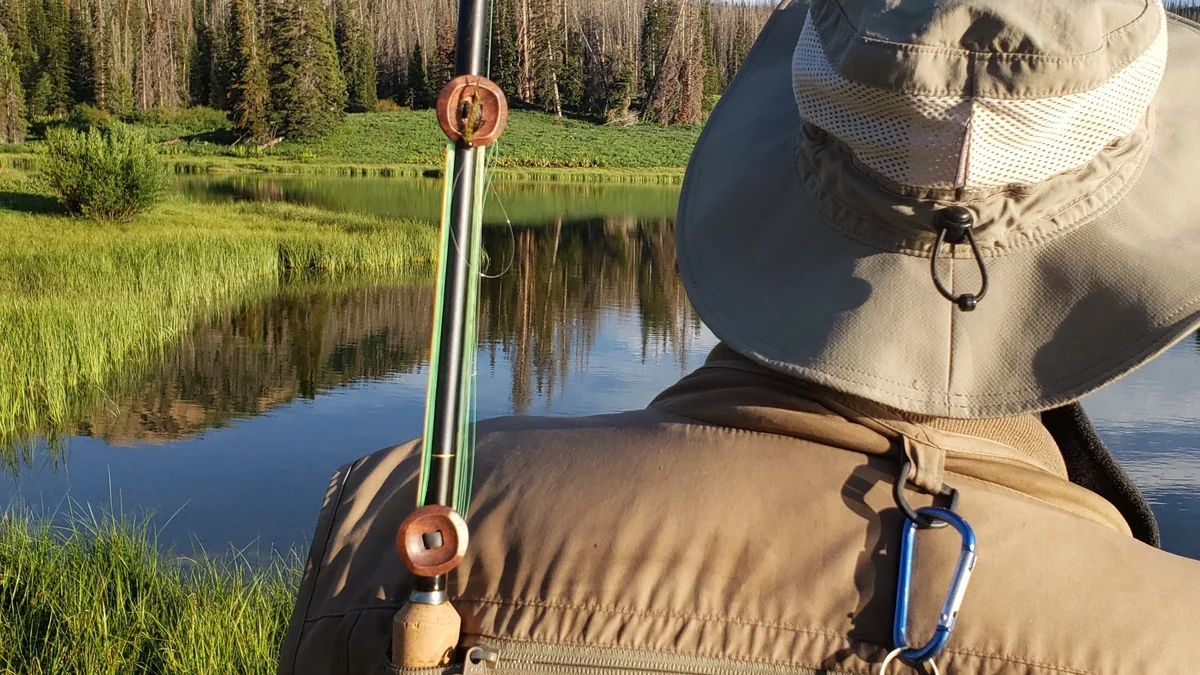
Mastering line control matters far more than stocking four dozen fly boxes. Keeping your tackle simple—carrying three or four spools of level line and tippet secured on compact wooden button line holders alongside a small tin of kebari—clears mental clutter so you can focus on reading currents rather than rummaging through pockets.
Dialing In Your Autumn Presentation
On your next crisp morning on the river, do not default to standard dead-drifts. Tie on a pheasant-tail sakasa kebari, pick a distinct seam along a submerged granite boulder, and try three distinct deliveries:
- The Pause and Anchor: Cast upstream of the boulder. Keep your rod tip high, holding all level line off the water. Let the fly drop into the pocket and hold line tension just enough to suspend the fly in place against the flow.
- The Rhythmic Pulse (Saso-gake): As the fly drifts toward you, twitch your rod tip gently on a half-second cadence. Watch the hackle breathe. Strikes on the pulse feel crisp and deliberate.
- The Deep Sink and Swing: Lower the rod tip slightly to let the fly sink at the head of a pool, then raise the blank smoothly to make the reverse hackle flare as it sweeps upward through the water column toward the surface.
Western soft hackles and Japanese sakasa kebari were built by anglers facing different rivers, but they share the same timeless truth: soft feathers come alive in moving water. Keep your tackle light, watch your hackle breathe, and let the seam do the work.