To prevent tenkara line tangles and wind knots, maintain casting loop tension by pausing cleanly at 12 o'clock, shorten your tippet to three feet in autumn breezes, and secure your line against the rod blank before bushwhacking. Never let slack line drift through turbulent seams or trail behind an uncollapsed rod.
Few things derail a crisp autumn morning on the river faster than staring at a micro-knot in 5X tippet with freezing fingers. In traditional fly fishing, you can reel your slack onto an arbor. In tenkara, your line is tethered directly to the rod tip, meaning every inch of slack is your personal responsibility. When autumn gusts howl down a canyon and golden alder leaves litter the currents, line management becomes the difference between catching fish and doing riverbank macramé.
Line tangles and wind knots are rarely random acts of bad luck. They are mechanical failures caused by slack line, erratic casting tempos, or sloppy transitions between pools. Here is how to diagnose the problem, fix your mechanics, and keep your line fishing cleanly from dawn until dusk.
The Anatomy of a Wind Knot: Casting Physics
Anglers love blaming the wind for knots, but wind rarely ties a knot by itself. Wind merely tightens the knot your cast already created. A “wind knot” is almost always a tailing loop—an error where the top leg of your unfurling line crosses below the bottom leg during the forward cast, looping over itself and catching the tippet or fly.
To fix tailing loops on a fixed-line rod:
- Stop snapping your wrist: Tenkara rods have soft, responsive tips. If you break your wrist backward or punch aggressively forward, you create an uneven rod-tip path that forces the line to intersect itself. Keep your wrist firm and let your forearm drive the stroke.
- Respect the 10-to-12 arc: Keep your casting stroke compact. Stop your backcast sharply at 12 o'clock (or 1 o'clock at most) and pause long enough for the line to unroll fully behind you before coming forward. Rushing the forward cast while your line is still unfolding behind you is the primary cause of knotted tippet.
- Tune line length to the conditions: A 15-foot level line is a joy on calm summer evenings, but it is an invitation for disaster in breezy fall conditions. When wind picks up, drop down to a line equal to the length of your rod, and keep your tippet around three feet. For dialing in precise setups, review our guide to tenkara line lengths and casting mechanics.
Collapsing a Tenkara Rod With Line Attached
One of the most frequent tangles happens when you finish fishing a pool, decide to hike 80 yards upstream through scrub oak, and try to navigate brush with a fully extended 12-foot graphite antenna. You snag a branch, the rod tip flexes, slips loose, and whips your level line into a rat's nest around the lilian.
You do not need to cut off your kebari or untie your level line every time you move. You simply need to collapse the rod correctly with the rig attached:
- Unhook or secure the fly: Stick the hook securely into your rod's EVA or cork handle, or onto a dedicated keeper ring.
- Maintain slight tension: Keep just enough tension to prevent the line from draping loosely across the rod segments.
- Collapse from the butt section up: Never collapse a tenkara rod tip-first. Hold the handle section, loosen the second-thickest section, and slide it down. Work your way upward toward the tip. As the rod collapses, the line will naturally loop down along the blank.
- Wind the remaining slack: Once the rod is fully collapsed down to its 20-inch carry size, wrap the remaining line around your storage solution so the entire package is locked tight against the blank.
Storing Tenkara Line on the Rod: Clip-On Holders vs. Spools
When you are roving quickly between pockets during active fall tenkara fishing, line storage efficiency dictates how much time your fly spends in the water. Anglers generally rely on two systems: traditional loose spools or rod-mounted clip-on holders.
| Feature | Clip-On Line Holders | Traditional Line Spools |
|---|---|---|
| Mounting Location | Clips directly to rod blank | Carried separately in pack/pocket |
| Transition Speed | Very fast (wind and walk) | Moderate (requires detaching line) |
| Memory / Coiling | Figure-eight reduces coil loops | Circular coils can induce line memory |
| Pack Footprint | Zero pocket space required | Takes pocket or pouch volume |
| Best Use Case | Active roving, tight brush, steep streams | End-of-day pack-down, backup rigs |
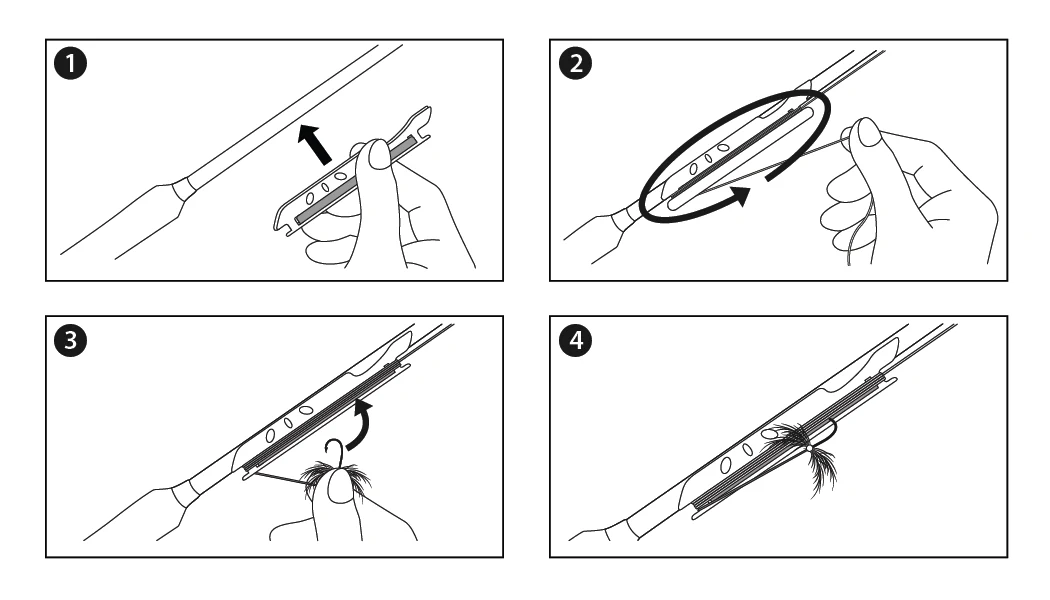
Traditional round spools (whether wood or foam) are great for storing pre-rigged lines inside your bag. But for active stream travel, reaching into your sling pack, detaching your line, and winding it onto a loose spool every time you hit a thicket of willows quickly becomes tedious.
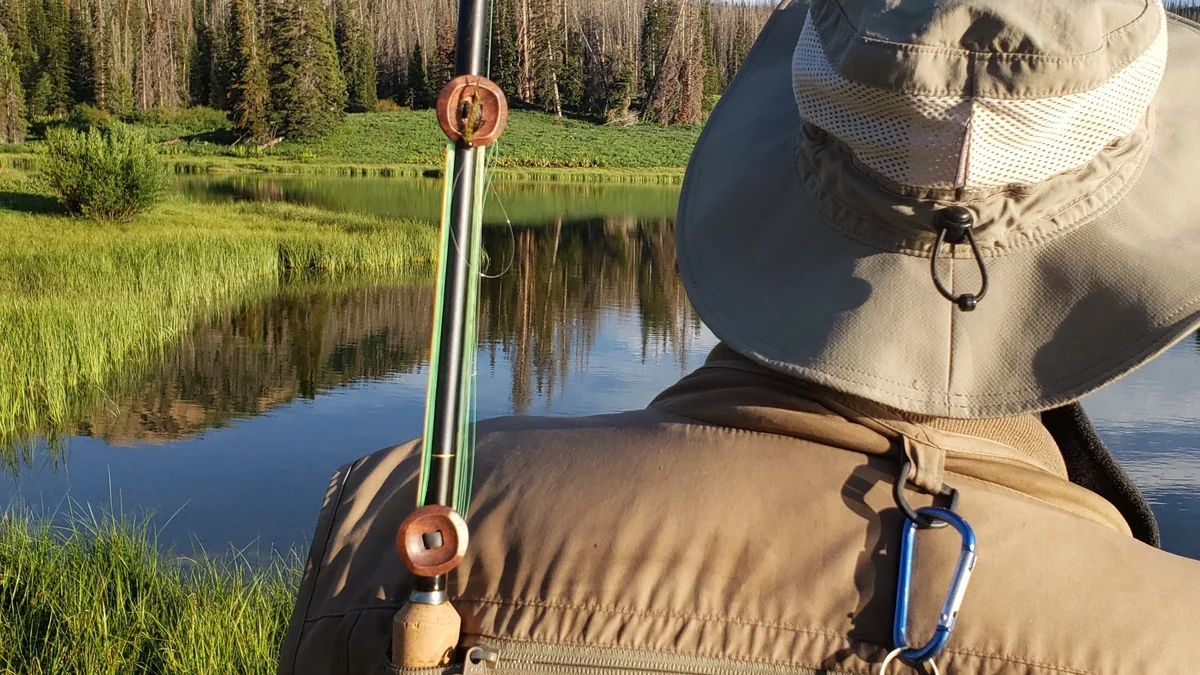
This is where Clip-On Rod Line Holders excel. By clipping the clip on line holder directly onto the rod, you create an on-rod winding station. When moving pools, you collapse the rod, wind your line around the holder, secure your fly in the foam notch, and hike. When you reach the next run, unspool the line, extend the rod tip-first, and you are fishing in under thirty seconds without a single tangle.
Stream Seams: Eliminating Water-Induced Twists
Not all line tangles happen in the air. Complex, turbulent currents will twist, knot, and drown lightweight level lines if you let slack sit on the surface. During autumn, floating leaves exacerbate this by catching on knot connections.
The solution is classic tenkara line control: keep your line off the water. Only your kebari and a portion of your tippet should touch the surface. By holding your rod tip high and keeping the fluorocarbon line elevated, you eliminate the micro-eddies, foam lines, and cross-currents that grab loose line and tie it into knots beneath the surface.
If you find yourself repeatedly pulling knots out of your tippet, take a breath, sit on a river rock, and check your pace. Shorten your tippet, smooth out your forward stop, and secure your line before bushwhacking. Simplicity on the water isn't about rushing; it's about eliminating the friction that keeps you from fishing.